
Kaspersky Alerts on AI-Powered Cybercrime Spreading in Asia Pacific
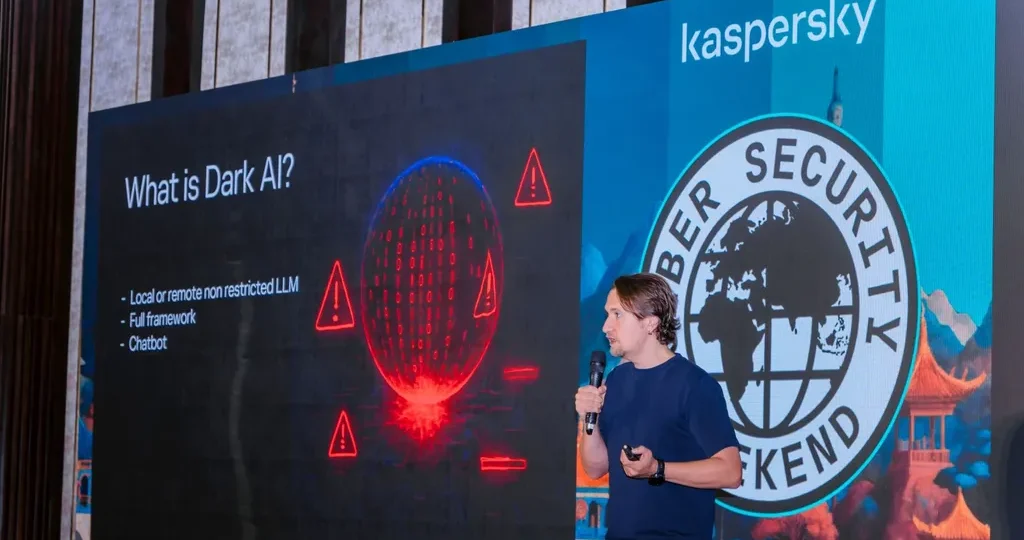
Cybersecurity firm Kaspersky has issued a warning about the growing use of artificial intelligence (AI) by cybercriminals across the Asia Pacific region. The company reports that malicious actors are increasingly leveraging “dark AI” tools to automate cyberattacks, create convincing phishing campaigns, and bypass traditional security systems.
Unlike conventional cyberattacks, which require manual effort and time to prepare, dark AI allows criminals to scale their operations and launch sophisticated attacks with unprecedented speed. This emerging trend poses significant risks to governments, businesses, and individuals, especially as digital transformation continues to accelerate in Asia Pacific.
Https://malaka555.sg-host.com/ researchers highlight that dark AI is not limited to large-scale criminal groups. Even small hacker collectives now have access to AI-driven malware and automated tools available on underground forums. This democratization of advanced cyberweaponry is raising alarms within the cybersecurity community.
How Cybercriminals Exploit AI Capabilities
AI can be weaponized in multiple ways to enhance the efficiency and impact of cyberattacks. For example, generative AI models are capable of producing highly realistic phishing emails that mimic official communications from banks, governments, or trusted organizations. These emails are often free of grammatical errors and written with natural fluency, making them harder for victims to identify as fraudulent.
Additionally, dark AI systems can analyze vast datasets of stolen credentials and detect patterns that help criminals guess passwords or security questions with remarkable accuracy. Machine learning is also being applied to evade security defenses, allowing malware to adapt in real time to avoid detection by antivirus software.
Perhaps most concerning is the potential use of AI to manipulate audio and video—commonly known as deepfakes. Cybercriminals can impersonate executives or government officials in video calls to authorize fraudulent transactions or spread misinformation at scale. Kaspersky warns that these tactics could severely disrupt both private and public sectors if left unchecked.
The Impact on Asia Pacific’s Digital Landscape
The Asia Pacific region is particularly vulnerable due to its rapid digital adoption and diverse cybersecurity maturity levels. While major economies like Singapore, Japan, and Australia are strengthening their defenses, smaller nations with limited resources may struggle to keep pace with evolving threats.
Businesses across industries—finance, healthcare, and e-commerce—are prime targets for AI-driven attacks. The financial sector faces risks from sophisticated fraud schemes, while healthcare institutions must contend with the possibility of ransomware targeting critical patient data. Governments are also in the crosshairs, as cybercriminals may exploit AI to interfere with public infrastructure, elections, or defense systems.
Kaspersky’s analysts stress that collaboration among regional governments and private organizations will be key in mitigating these threats. Without coordinated action, Asia Pacific could become a hotspot for dark AI exploitation, affecting economic stability and national security.
Strategies to Counter Dark AI Attacks
To combat the threat of dark AI, cybersecurity experts recommend a multi-layered defense strategy. Organizations are urged to adopt AI-driven cybersecurity tools that can detect anomalies and adapt to emerging attack patterns. Proactive monitoring, threat intelligence sharing, and employee awareness training remain crucial components of defense.
Kaspersky also highlights the importance of ethical AI development. By embedding transparency, fairness, and accountability into AI systems, technology providers can reduce the risk of misuse. Governments in Asia Pacific are being encouraged to establish clear regulatory frameworks to govern AI deployment, ensuring both innovation and security are balanced.
Furthermore, companies are advised to conduct regular simulations of AI-powered cyberattacks to test resilience and identify vulnerabilities. As cybercriminals refine their methods with dark AI, organizations must stay one step ahead by embracing advanced defensive measures.
Kaspersky concludes that while AI presents immense opportunities for innovation and growth, it also creates new attack surfaces. The challenge for Asia Pacific will be to harness AI’s potential while safeguarding against its weaponization in the digital underground.